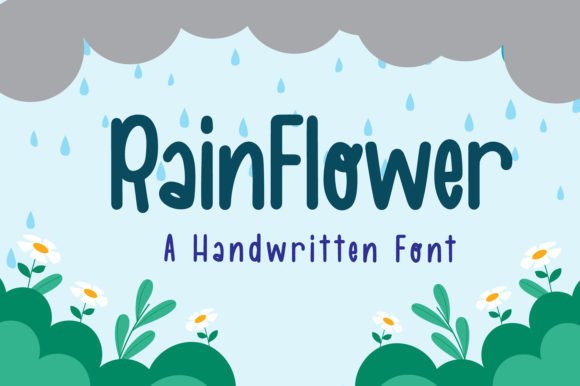
Rainflower: A Sweet Handwritten Font
There I was, staring at a blank brand board, trying to find the right tone for a new boutique coffee shop. The client wanted something warm, approachable, and a little whimsical. I pulled up my font library, scrolling through dozens of options—too stiff, too modern, too generic. Then I found it: Rainflower. Its soft curves and gentle slant felt like a friendly nod from a neighbor. I gave it a try on a logo concept, and it immediately brought a sense of personality that other fonts lacked.
The Personality of Rainflower
Rainflower is a script handwritten font with a distinct character. It’s not overly ornate, but it carries a natural, almost organic feel. Each letter flows smoothly, with subtle variations that make it feel handcrafted rather than mechanical. The font has a playful yet professional edge, making it ideal for brands that want to feel both creative and trustworthy. It’s perfect for small businesses, local shops, and any project that benefits from a human touch.
When I tested it on a packaging mockup, the font added a sense of authenticity. It looked like it had been written by hand, which made the product feel more personal. On a business card, it stood out without being overwhelming. And on a website header, it provided a visual anchor that drew the eye without competing with the rest of the design.
Where Rainflower Shines
Rainflower excels in display and headline roles. It works best as a logo font, accent font, or decorative element rather than a body text font. Its unique style makes it ideal for branding projects that require a sense of warmth and individuality. Whether it’s a café sign, a skincare product label, or a social media graphic, Rainflower adds a layer of charm that can elevate a design.
In a recent project, I used Rainflower for a bakery’s packaging. The font complemented the rustic aesthetic of the brand, giving it a homemade feel that resonated with customers. On a flyer, it helped create a cohesive visual language that tied together the design elements. For a website hero section, it provided a strong, memorable visual presence that supported the brand’s message.
It also pairs well with other fonts. When paired with a serif or sans serif typeface, it creates a balanced contrast that enhances readability without sacrificing style. For example, using Rainflower as a headline alongside a clean sans serif body font can create a modern yet friendly look. It’s also great when used sparingly as an accent, adding a touch of personality to a more structured design system.
Limitations and Considerations
While Rainflower is a versatile font, it’s not suited for every project. Its cursive style may not be appropriate for formal corporate branding, where clarity and professionalism are key. In small sizes or long paragraphs, it can become difficult to read, especially if the design doesn’t allow for sufficient spacing or contrast.
For commercial use, it’s important to check the licensing terms. Some fonts come with restrictions on how they can be used in client work, templates, or merchandise. Always review the license agreement before finalizing a project, especially if you’re working with a client who will be using the font in multiple formats.
Testing Rainflower in Real Projects
Before committing to a font, I always test it in different contexts. I create mockups for logos, packaging, social media posts, and web headers to see how it performs in real-world scenarios. With Rainflower, I found that it worked best when used in limited quantities—such as in headlines, tags, or short phrases—rather than as the main text.
I also experimented with different weights and styles, if available. Some fonts come with alternate characters, ligatures, or swashes that can add variety and depth. If Rainflower includes these features, they can be useful for creating a more dynamic and engaging design.
For multilingual support, it’s worth checking whether the font includes characters for other languages. While Rainflower may be designed primarily for English, its versatility could extend to other scripts, depending on the font’s scope.