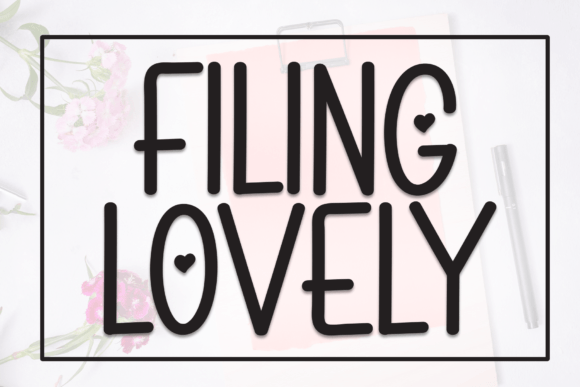
Filing Lovely Font Review
It was a quiet Tuesday morning when I found myself staring at a stack of bakery boxes, wondering how to make them feel more polished. The bakery had been around for years, but the packaging felt a bit stale. That’s when I remembered Filing Lovely, a handwritten font that had caught my eye during a recent design review. It wasn’t just another font—it felt like a friendly voice waiting to speak for the brand.
Filing Lovely is a sweet and friendly script font with a natural, handwritten feel. Its style isn’t overly ornate or complex; instead, it feels warm and approachable. Each letter flows smoothly, making it ideal for creating a sense of authenticity and personality in design work. Whether used for a logo, label, or social media graphic, it adds a touch of charm without overwhelming the viewer.
Real-World Use: A Bakery Box Transformation
For the bakery, I experimented with Filing Lovely on the box labels. The font brought a fresh, handcrafted vibe that matched the brand’s identity. It worked especially well for the product name, giving it a personal, artisanal feel. The font also paired nicely with a clean sans serif for the ingredients list, ensuring readability while maintaining visual interest.
What stood out was how Filing Lovely maintained its character even at smaller sizes. On the back of the box, where space was limited, the font still looked intentional and legible. It didn’t feel forced or cluttered, which is a common issue with many handwritten fonts.
Why Filing Lovely Works for Business Branding
Typography plays a huge role in how a business is perceived. A well-chosen font can make a brand feel more professional, trustworthy, and memorable. Filing Lovely does this by adding a human touch to otherwise digital or printed materials. It’s not just about aesthetics—it’s about creating an emotional connection with customers.
For small businesses, consistency is key. Using a single font across all materials—whether it’s a menu, social media post, or packaging—helps reinforce brand recognition. Filing Lovely is versatile enough to be used as a headline font, a logo element, or even a decorative accent. It adapts well to different formats, from print to digital.
Practical Tips for Using Filing Lovely
When using Filing Lovely, consider the context. It shines best in short phrases, headlines, and logos. For longer text, it may not be the most readable option, so pairing it with a complementary font is a smart move. A modern sans serif like Montserrat or a classic serif like Georgia can balance the warmth of Filing Lovely with clarity and structure.
On mobile screens, it’s important to ensure that the font remains legible. Test it at different sizes and in different lighting conditions. For printed materials like labels or packaging, check that the font looks sharp and consistent across various substrates. Filing Lovely handles these scenarios well, but always do a few test prints before finalizing designs.
Where to Use Filing Lovely in Your Business
The applications for Filing Lovely are wide-ranging. It’s perfect for product labels, such as those for skincare products or candles, where a personal touch is valuable. It works great on café menus, helping to set a cozy, inviting tone. For online shops, it can enhance banners, product titles, and promotional graphics, making the brand stand out in a crowded marketplace.
Even in digital spaces, Filing Lovely adds a unique flair. Instagram posts, email newsletters, and website headers can all benefit from its soft, friendly appearance. It’s a great choice for handmade or boutique brands looking to convey authenticity and care in their messaging.
Before using Filing Lovely, take a moment to review the font’s features. Check if it includes multiple weights, ligatures, or alternate characters that might add more depth to your design. Also, confirm that it supports the languages you need and that the licensing allows for commercial use. These details can make a big difference in how the font performs across different projects.